 SurfaceCast: Surface Temp
SurfaceCast: Surface Temp
See how hot the ground actually gets — hour by hour, before you step outside.
Download on the App Store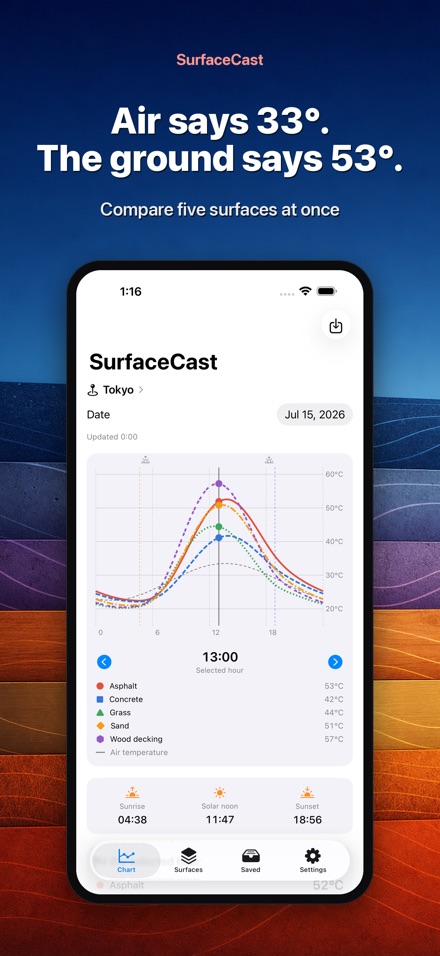
Screenshots
Features
Compare surfaces side by side
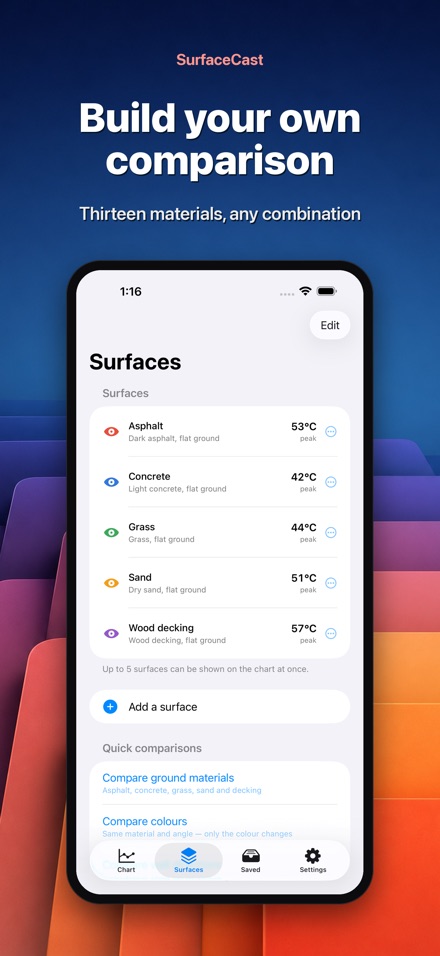
Put up to five surfaces on one chart: asphalt, concrete, grass, bare soil, sand, wooden decking, brick, painted metal, and light or dark walls. The gap between them is usually far wider than people expect.
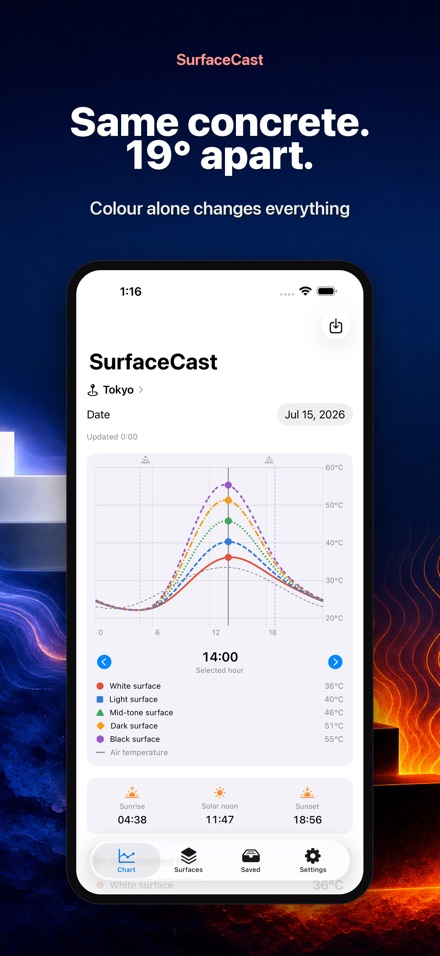
Colour changes everything
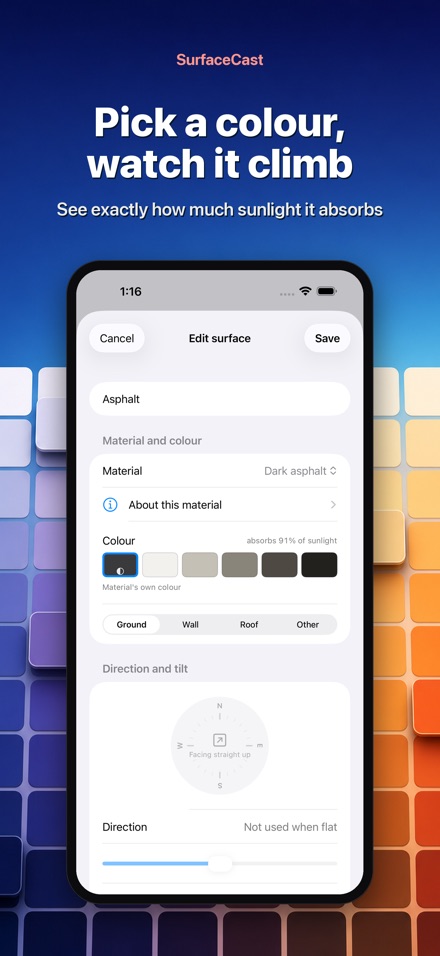
Keep the material, the direction and the angle identical, and change only the colour. On a clear summer day a white surface and a black one can sit around 19°C apart. SurfaceCast shows exactly how much sunlight each shade absorbs.
Walls and slopes, not just the ground
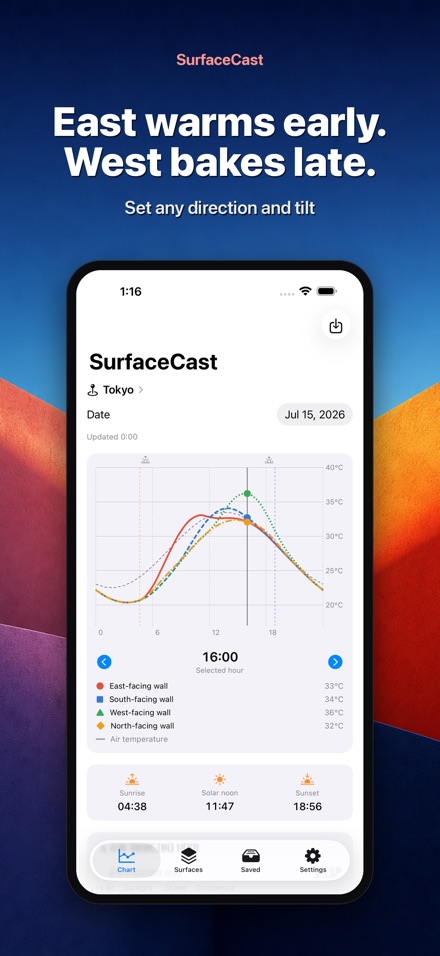
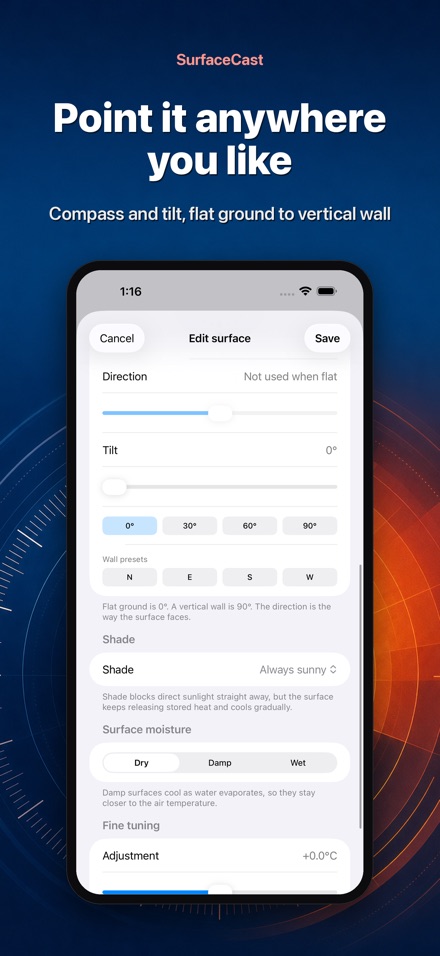
Every surface has a compass direction and a tilt, from flat ground to a vertical wall. Point a wall east and it warms through the morning; point it west and it peaks late in the afternoon.
Shade that behaves like real shade
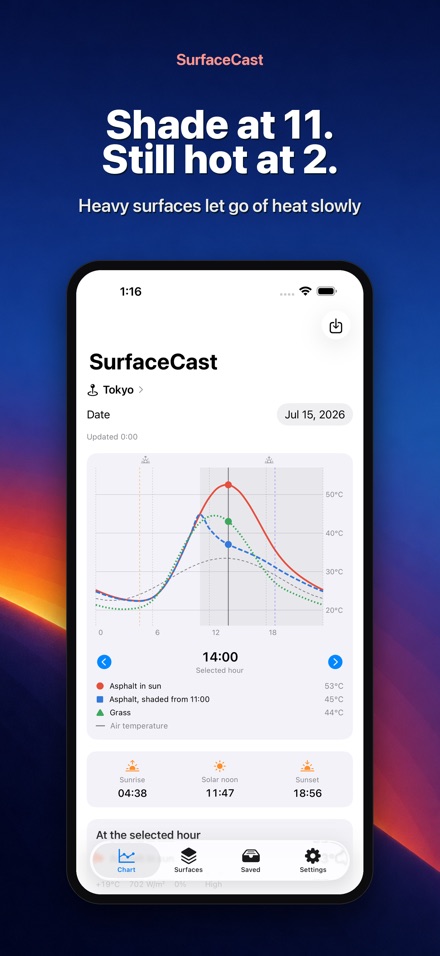
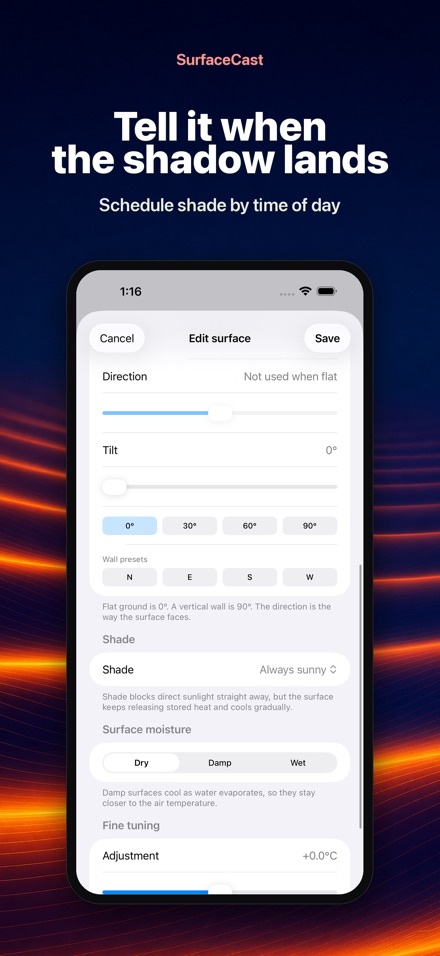
Mark the hours when a surface falls into shadow. Sunlight drops immediately, but a heavy surface keeps releasing stored heat and cools gradually — the lag you feel outdoors, modelled properly.
Read any hour in detail
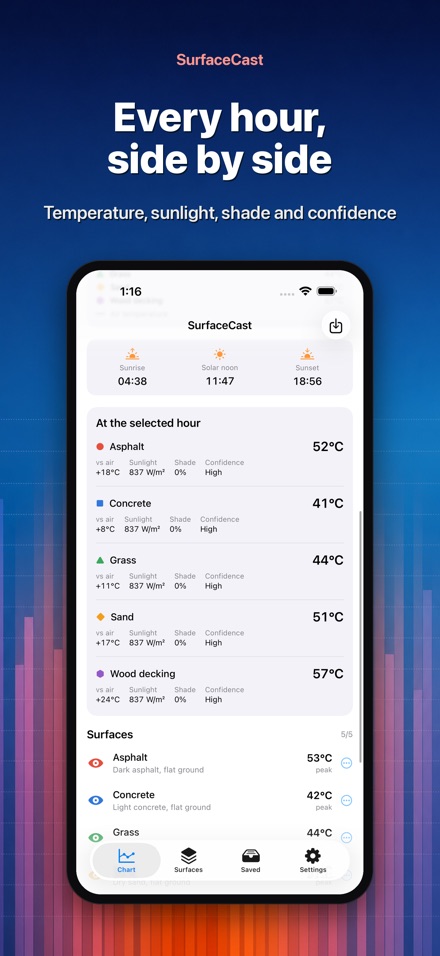
Tap an hour for a table showing each surface's estimated temperature, the difference from air temperature, the sunlight landing on it, its shade level, and how confident the estimate is.
Save the places you check often
Store a set of surfaces under a name like "the back garden" or "the dog walk route", then reload it later with a new date. Works from a cached forecast when you are offline, in Celsius or Fahrenheit.
Air temperature tells you almost nothing about how hot the ground actually
is. On a sunny summer afternoon, dark asphalt can run far hotter than the
air, while grass a step away stays close to it. SurfaceCast lets you see
that difference as a curve, hour by hour, before you go outside.
Pick a place and a date, then add the surfaces you care about — asphalt,
concrete, grass, bare soil, sand, a wooden deck, brick, a painted metal
roof, a white or dark wall. Up to five at once, drawn on the same chart so
you can compare them directly.
WALLS AND SLOPES, NOT JUST THE GROUND
Every surface has a compass direction and a tilt. Point a wall east and it
warms through the morning; point it west and it peaks late in the day. Set
a slope anywhere from flat ground to a vertical wall and watch the curve
move. Four one-tap presets cover north, east, south and west walls.
SHADE THAT BEHAVES LIKE REAL SHADE
Mark the hours when a surface falls into shadow — say, shaded from 11:00.
Sunlight drops immediately, but the temperature does not: heavy materials
keep releasing stored heat and cool down gradually, exactly as they do
outdoors. That lag is the whole point, and SurfaceCast models it.
WHAT YOU GET
• 24-hour estimated surface temperature for up to five scenarios
• Live hourly weather for your location, or any place you search
• Air temperature drawn alongside, so the gap is obvious
• Sunrise, solar noon and sunset markers, plus shaded bands on the chart
• Tap any hour for a side-by-side table: temperature, difference from air,
sunlight on that surface, shade level and confidence
• Peak temperature and the time it happens, for every scenario
• Save scenario sets — "the back garden", "the dog walk route" — and reload
them later with a new date
• Celsius or Fahrenheit, and it works from a cached forecast when offline
HOW IT WORKS
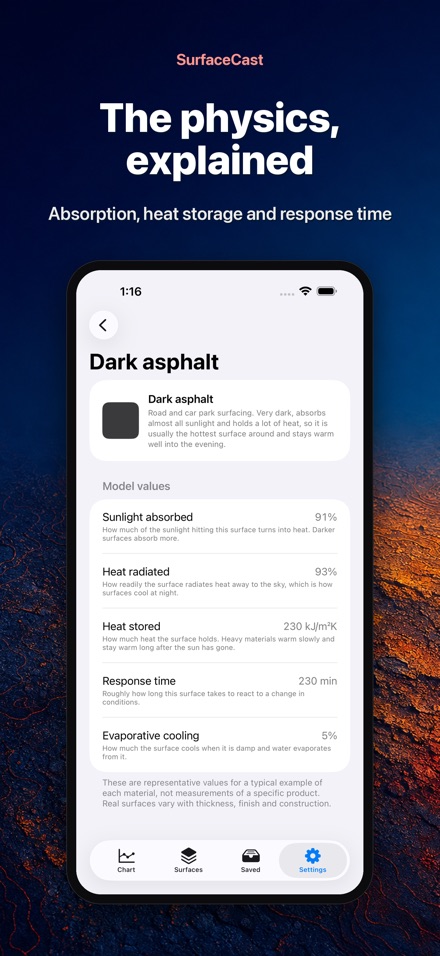
SurfaceCast computes the sun's position for your place and time, works out
how much sunlight lands on a surface at that angle and direction, then runs
a heat balance in short internal steps: sunlight absorbed, heat lost to the
wind, heat radiated to the sky, heat exchanged with the ground below and
cooling from evaporation on damp surfaces. Each material carries its own
absorptivity, emissivity and thermal mass, so heavy and light surfaces
behave differently — as they should.
These are physics-based estimates for observation, learning and curiosity.
Real surfaces vary with thickness, construction, moisture, nearby
reflections, local wind and the exact shape of the shadow. SurfaceCast is
not a safety instrument and does not judge whether a surface is safe to
touch or walk on — if that matters, measure it with an infrared thermometer.